Genocide wants no witness. Genocide wants to elude the name.
On December 29, 2023, South Africa initiated proceedings against Israel at the International Court of Justice, charging it with committing genocide in the Gaza Strip. South Africa did what no other nation would. And by doing so, South Africa exposed itself to the possibility of retaliation on a global scale. What is most surprising is to see that retaliation come from inside the house of the South African state.
Breaking with the South African government’s official policy on the Israeli genocide of Palestinians, South Africa’s Arts and Culture Minister Gayton McKenzie can only be described as going rogue. McKenzie’s apparent unilateral decision to cancel Elegy, a video installation by Gabrielle Goliath, as the South African pavilion selection for the upcoming 61st Venice Biennale is a shock to all who are invested in witnessing how artists will respond to the ongoing genocide, as we mourn, grieve, and together develop forms of care, solidarity, and survivance.
In response to McKenzie’s decision, the five selection committee members for the South African pavilion — who chose Goliath unanimously as the national representative in December — issued an open letter. “We therefore reject, without reservation, any effort to coerce artists or curators into altering artistic statements to serve political narratives,” they wrote. “We further reject all forms of censorship and intimidation that seek to curtail critical artistic practice or undermine the autonomy of cultural production. Such interference is unacceptable and stands in direct opposition to the values of democracy, accountability, and cultural freedom.”
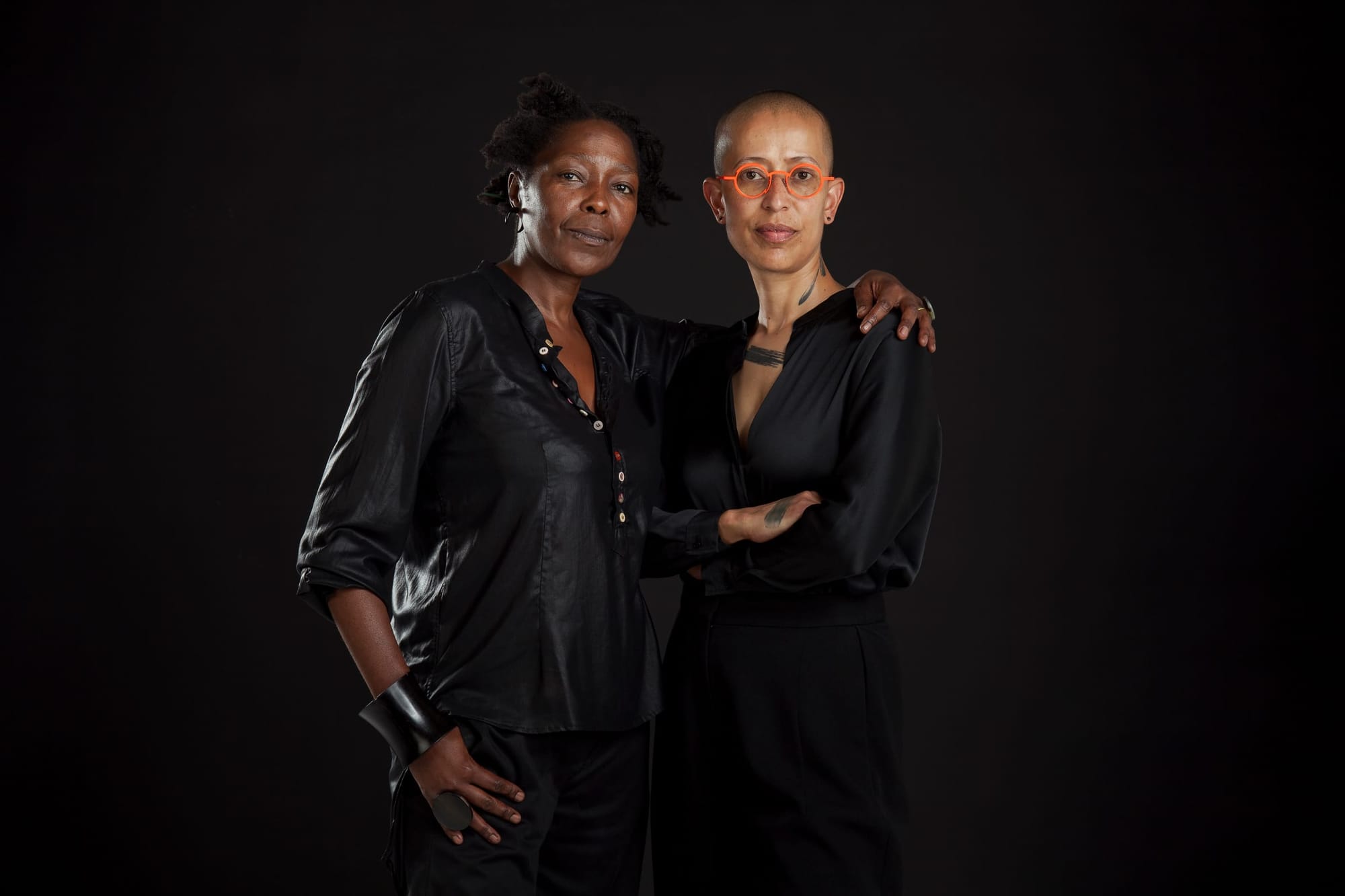
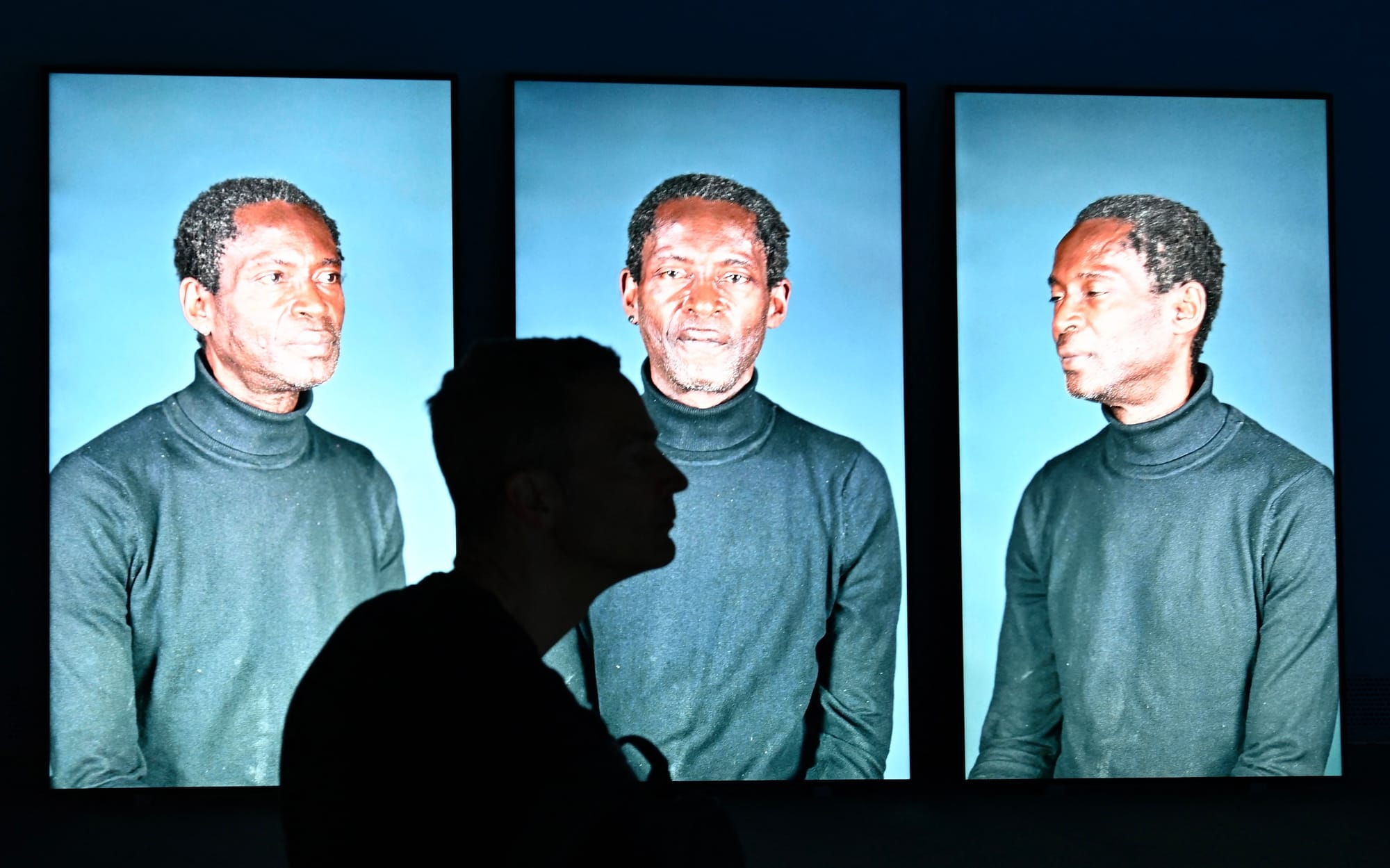
Gabrielle Goliath’s sound, video, and installation Elegy (2015–ongoing) is a work of witness, collective reverberation, duration, and grief. Goliath has been making iterations of Elegy for over a decade. It is a necessary work of and for this moment, a project that helps us to bridge the present with what might come after. Which is to say, Elegy as a poetic intervention for the dead, as well as for those of us left to consider their deaths amid what often feels like an impossibility for action, provides us an opportunity to affectively register how the dead shape the lives of the living. Elegy is not simply a eulogy. It is a communal lamentation.
The cancellation of Elegy, and therefore the threat to South Africa’s place in the Biennale, brings to mind the decision made by the Whitney Museum of American Art to cancel “No Aesthetic Outside My Freedom: Mourning and Militancy" in May 2025, days before the performance was to take place. The piece by artists Noel Maghathe, Fadl Fakhouri, and Fargo Tbakhi is also about Palestinian mourning. And the museum’s 50-year-old Independent Study Program that invited the performance has since been suspended. Similarly, Lebanese-born artist Khaled Sabsabi was disqualified (and later reinstated) as a representative of the Australian pavilion at the Venice Biennale last year over an artwork that included footage of assassinated Hezbollah leader Hassan Nasrallah. In October 2023, Artforum’s then-Editor-in-Chief David Velasco was fired by Penske Media for publishing a letter calling for a ceasefire in Gaza with thousands of signatories, including artists Barbara Kruger and Kara Walker, sparking a boycott of the publication that continues today. Artists in Colorado, Indiana, London, Miami, Toronto, and elsewhere have faced retaliation, backlash, and censorship for opposing the genocide in Gaza.
For many years, South Africa stood as an example of revolutionary struggle in its fight against the annihilating logics of Apartheid. In a betrayal of that legacy, McKenzie offers a misplaced nationalism in the face of fascism; nationalism in the face of genocide. Such revanchist ideas of nationalism belie that South Africa itself has had eruptions of xenophobic violence and that Elegy might also be understood within that context. The expansive nature of the performance, which moves beyond the nation-state to take up the genocide of the Herero in Namibia and of Palestinians in Gaza, means that the work holds the potential for audiences to bring to it experiences and histories of other disasters. Elegy is a work of “planetary concerns of loss and disregard,” in the selection committee’s words, and to censor it by invoking nationalist logics is to willfully misunderstand the piece itself, what ails our planet, and the breadth of responses necessary to push us toward other ways of being.
In a January 4 letter to the Department of Sport, Arts and Culture of South Africa and shared with us, Goliath, pavilion curator Ingrid Masondo, and Goliath’s studio manager James Macdonald write:
We consider the threat of the Pavilion’s termination and the Department’s withdrawal and disassociation from the selected project to reflect an abuse of power and due process, and a contravention of the right to freedom of expression. We do not believe it is the right or duty of a Minister — especially a Minister for Sport, Arts and Culture — to prescribe or constrain what artists, sports communities and the public can or cannot reflect upon or respond to. Doing so would foreclose the possibility of the arts to facilitate meaningful engagement with urgent and challenging sociopolitical concerns. It is our view that the South African Pavilion at the Venice Biennale presents a unique opportunity for South Africa to demonstrate its commitment to creative freedom, social repair, and healthy debate on an important global stage.
In Elegy, mourners stand one behind the other: Each one is spotlit. The first mourner stands on the raised platform. The others wait to step up and take their turn on the riser. A mourner mounts the platform, stands there for several seconds, sings and holds a note, steps down, and walks to the end of the queue to rejoin the line of those who wait.
The mourners step into the place left by those who came before them; they hold the space of those who have been murdered; they sound a note, a wail, of both grief and presence. Each iteration of Elegy manifests that a note can be passed from one voice and taken up by another as an act of witness and sustenance in the face of ongoing catastrophe.
There is a certain continuity between Elegy and the previous Venice Biennale’s South African pavilion selection, which articulated an idea of “landcare.” The pavilion described Quiet Ground, as that selection was named, as “rooted in ongoing legacies of forced migration in South Africa,” an exhibition that “focuses on how the dispossessed reconnect with the land and investigates cycles of loss and repair during multiple iterations of displacement.”
Gaza more than thematizes these profound concerns of multiple displacements and dispossessions, loss, repair, and landcare for a now toxic, war-ravaged landscape. That Elegy follows Quiet Sound would have offered us another reason to see how South Africa might be one of the world’s most important sources for charting how we might live together after catastrophe and violence.
In her introduction to Zora Neale Hurston’s Barracoon: The Story of the Last “Black Cargo” (2018), the novelist and poet Alice Walker writes, “Those who love us never leave us alone with our grief. At the moment they show us our wound, they reveal they have the medicine.”
South Africa’s cancellation of Elegy threatens to join the ignoble set of actions meant to disappear Gaza and Palestinians from the art world’s public sphere. To say that this action is like a tremor from the trauma of the genocide-in-progress is not to overstate the shattering effect of an official acting as a censor on behalf of the same government whose case against Israeli acts of genocide compelled the world to bear witness. It feels like a betrayal because it is one. The only remedy is the reinstatement of Elegy, as is, as the South African pavilion’s selection.
Elegy is wound and medicine when mourning itself is under threat.