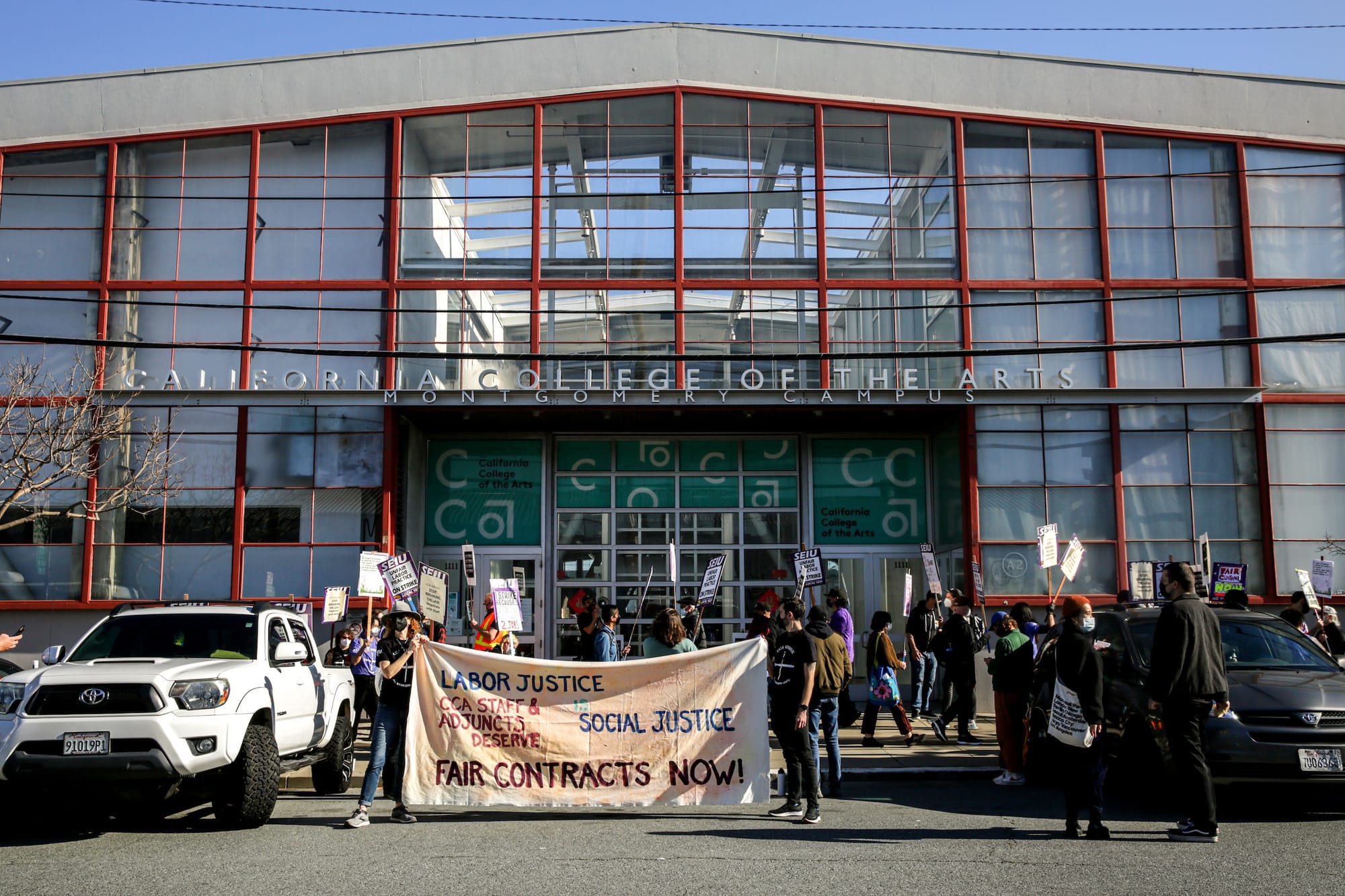
This week San Francisco’s California College of the Arts (CCA) announced plans to close by the end of the 2026-2027 school year. CCA’s campus will then be owned by Vanderbilt University.
Citing CCA’s long-standing financial struggles, including “demographic shifts and a persistent structural deficit,” CCA President David C. Howse called the plan “a decisive act of stewardship.”
Deficits? How can this be? San Francisco is dense with millionaires. It frequently boasts the highest number of billionaires anywhere. How does one of the wealthiest cities in the world lose its last and oldest progressive art school? Intentionally.
I taught at a variety of Bay Area art schools including CCA prior to moving to the DC area in 2019. I was appointed Scholar in Residence at CCA’s Center for Art + Public Life from 2015 to 2017. Art and activism have been the focus of my work for years.
I first wrote about San Francisco’s wealth disparity and artists’ exodus for KQED in 2014. The art scene has always struggled to attract technology wealth, and today’s crypto kings have yet to emerge as philanthropists defending the arts or freedom of expression.
The loss of CCA should be considered in relation to staggering wealth disparities and lack of social investment, primarily perpetuated by the technology sector, much of which has tight alliances with today’s leadership in Washington, DC. The indifference of wealth that has long-vexed San Francisco is now a systemic threat to the national ecosystem.
These connections are evident in sweeping changes aimed at dismantling the social safety net and the cultural landscape. Last year, when funding was slashed for the National Endowment for the Arts, the National Endowment for the Humanities, and the Institute of Museum and Library Services, the domino effect decimated initiatives across the country.
The Corporation for Public Broadcasting dissolved recently and the fate of PBS and NPR now hangs in the balance. Take note of who suffers the impact from these losses — working-class people of all stripes, children, veterans, people with disabilities, marginalized and vulnerable communities. The list goes on, and it doesn’t include oligarchs.
While it is difficult to track daily pronouncements from Washington, DC, aimed at limiting freedom of expression, the relative silence of the technology sector in the face of these changes is equally alarming, particularly given its supposed values in creativity, experimentation, and innovation. Meanwhile, most influential technology headquarters are furnished with amazing private art collections that rival those of public museums.
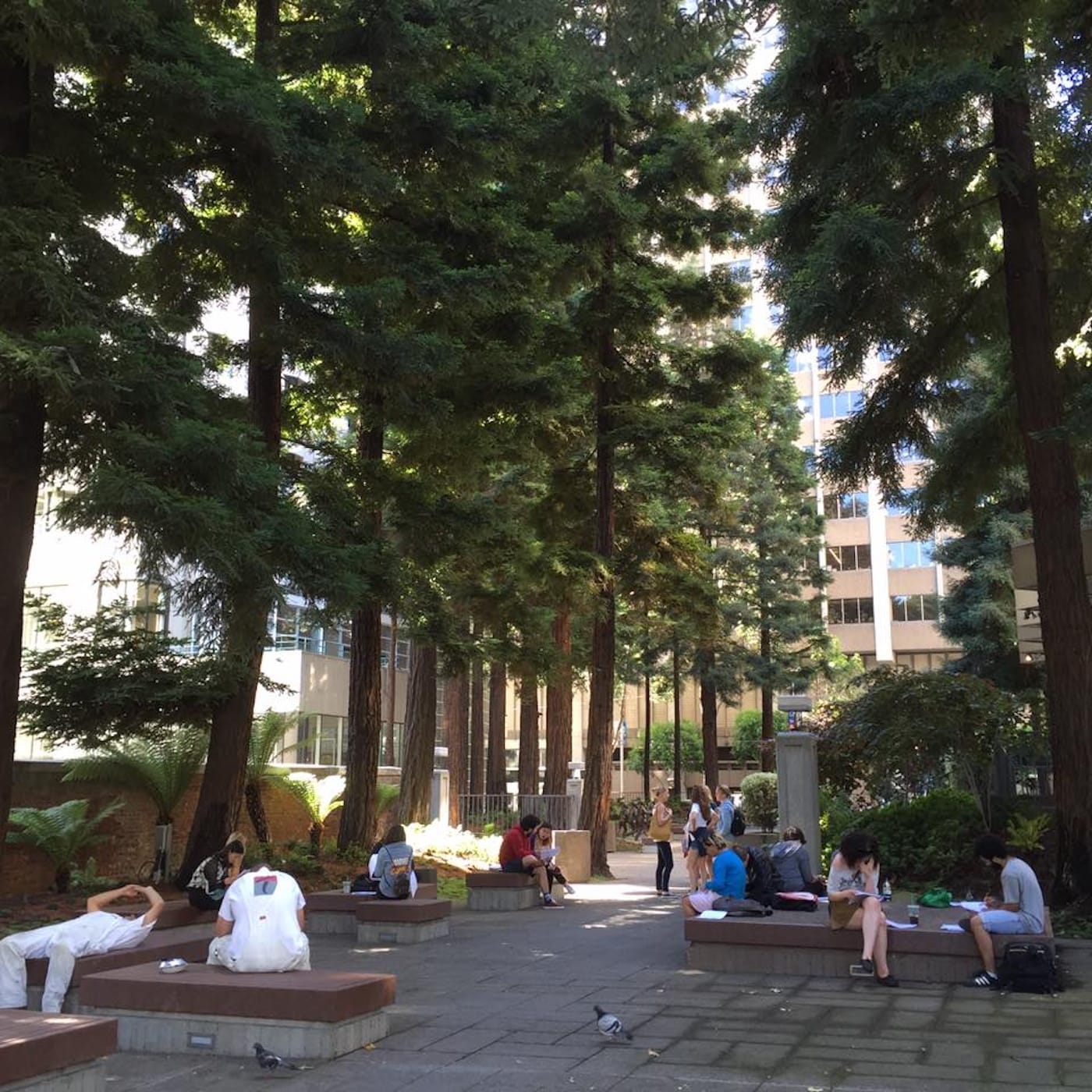
As San Francisco’s last remaining and oldest private arts and design school — CCA will be 120 years old when it sunsets — the institution has been an essential stakeholder in art history and American history by extension. I spoke with Shalini Agrawal, my former director at CCA’s Center for Art + Public Life, to ask for her thoughts. Previously Associate Professor in Critical Ethnic Studies and Interdisciplinary Studies, with a 17-year track record at CCA, Professor Agrawal considered the losses and the possibilities that might be left open.
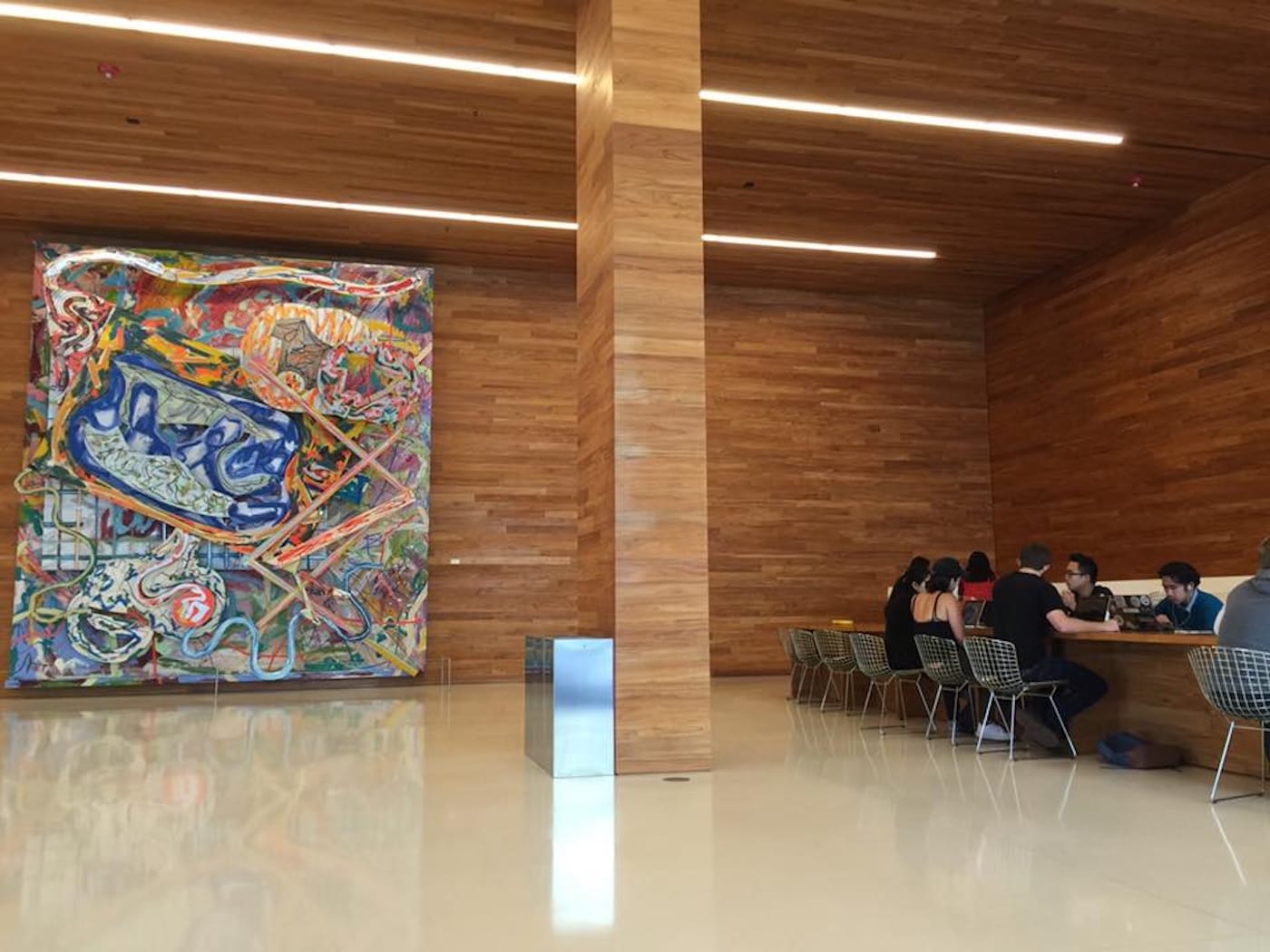
“CCA would always bring in the most progressive artists and thinkers in the departments I worked in … There was just a lot of excitement in bringing in different thinkers,” she told me. “The Bay Area has always been a nexus for creative thinking and social justice. As creative thinkers, we also solve hard problems — I hope something [new] will emerge from this … perhaps something grassroots.”
In West Coast art school parlance, the grassroots are the gold standard for excellence — and historically speaking, community organizing at the grassroots level has been essential to bringing about change in the United States. Barack Obama’s candidacy for presidency was secured by $5 campaign fundraisers early on. Grassroots action brought about change, and it can again. 2028 is on the horizon.
CCA’s absence will have a wide-reaching impact that will be hard to quantify. What calculations can be made to demonstrate a loss of imagination? CCA always attracted local, national, and international students — and teaching is like scattering seeds on the wind, knowing art and ideas can take root anywhere. My students were frequently engaged in social justice issues, deeply invested in diversity, equity, and inclusion, and always focused on building community. CCA’s legacy contains scores of talented creatives, all wildly dangerous to the status quo for their ability to imagine a more expansive future.
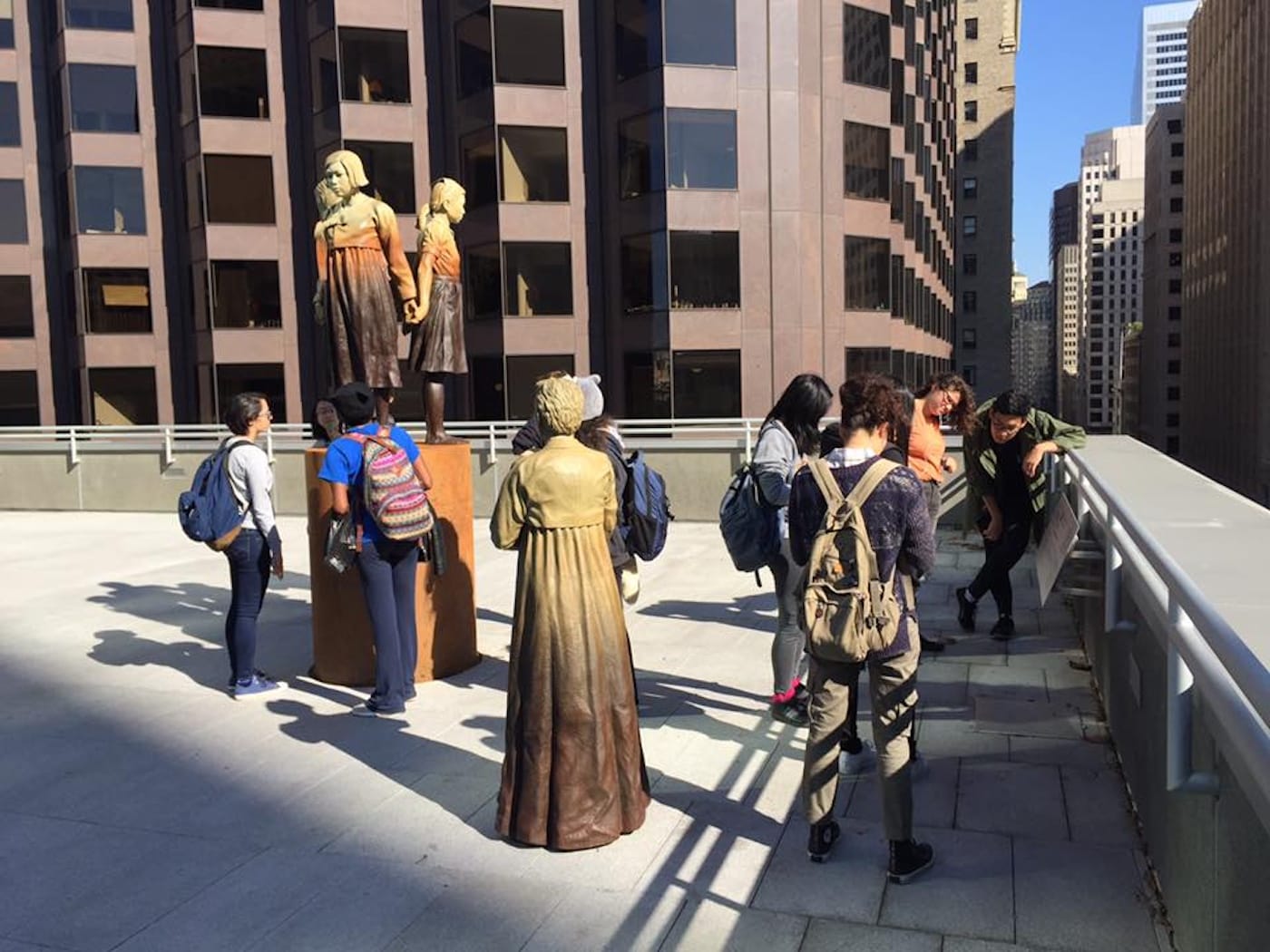
Artist and CCA Professor Emeritus Chris Johnson is set to retire this year after 48 years of teaching at the college, dating to when it was called California College of Arts and Crafts (CCAC). “I was preparing for what I assumed would probably be my last undergraduate class,” he posted on Facebook. “It’s just that I thought that the school would always be there, with all of the inspiring growth it provided. It’s all of those meaningful conversations and moments of encouragement and insight that will be missed.”
After noting CCA’s plans for students who will graduate next year, Johnson added, “After that we will all have to come to terms with the vast changes in what it means to study art in Northern California.”
The lack of support that has resulted in CCA’s closure feels like a betrayal perpetuated by the San Francisco Bay Area’s wealthiest residents, who may also be party to the battle for democratic values unfolding before us today, but I trust the college’s past and present communities will make good on the grassroots promise that remains in San Francisco.
The names on the walls might change, but I still believe in artists, and I’ll never give up on the West Coast. Si se puede, as we learn to say in school. American labor leader and feminist activist Dolores Huerta said it first, President Barack Obama said it last, and I’ll say it again — yes, we can.